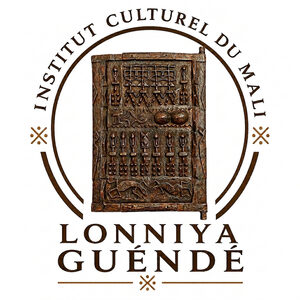
INSTITUT CULTUREL DU MALILONNIYA GUÉDÉ
In Malian traditions, the Guédé is the space where grain (millet, rice, sorghum...) is threshed to remove the husks and impurities and preserve the essential kernel.
Lonniya Guédé borrows this image as a philosophy of knowledge. It represents:
ICM sees knowledge as a precious material that must be worked, enriched and shared.
The Dogon door, traditionally placed at the entrance of granaries, symbolizes the protection and preservation of heritage. Its cosmogonic patterns connect the earthly world to that of ancestors and the sacred, making the door a guardian of memory and knowledge passed from generation to generation.
In traditional Malian ideograms, notably Bambara and Dogon, combinations of lines and dots represent philosophical concepts: universal knowledge, the crossroads as a place of meeting and transmission, and the protection of sacred space.